
Can Positive Behaviour Support (PBS) Help Your Family?
You have a child or family member who finds certain situations overwhelming, who struggles to communicate what they need, or whose behaviour has started to affect daily life at home or school.
If you've been searching for support for them, you might have come across the term Positive Behaviour Support, or PBS.
Like many families, you may have wondered, "What actually is this? Is it right for us? And where do I even start?"
What Is Positive Behaviour Support?
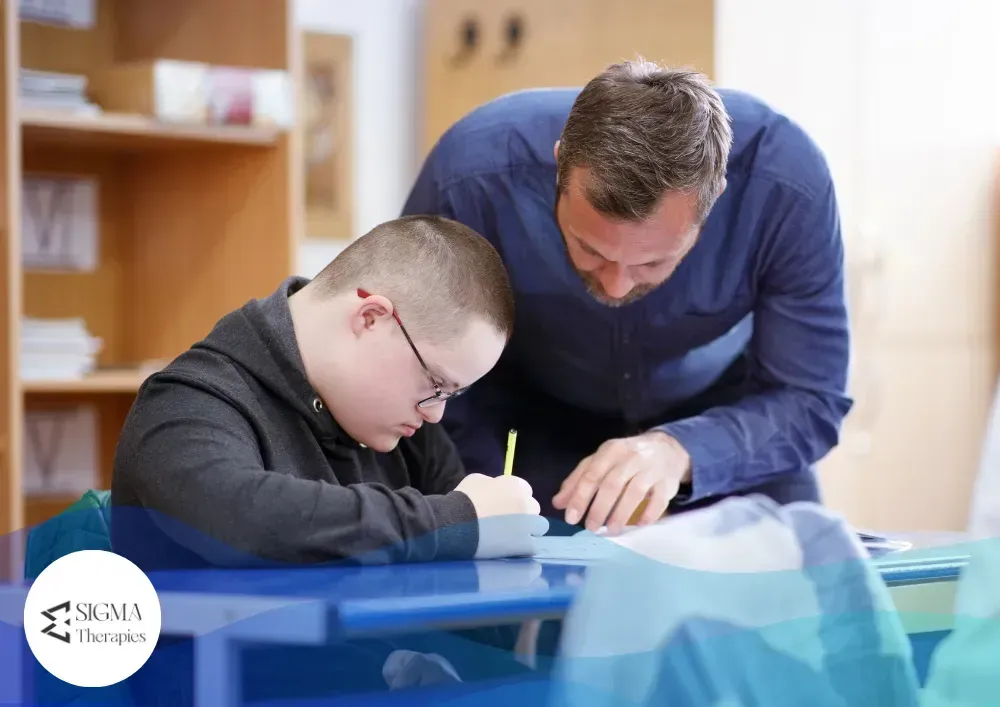
Positive Behaviour Support is an evidence-based approach to understandingwhy a person behaves the way they do. It enables the development of practical strategies to help them thrive.
It's not about punishment. It's not about forcing someone to act "normal." And it's definitely not about labelling a person as difficult or broken.
PBS starts with a simple premise: all behaviour is communication. When someone is struggling (i.e., melting down at school drop-off, refusing transitions, becoming distressed in loud environments, or lashing out at people they love), there's always a reason. Positive Behaviour Support helps uncover that reason and, from there, builds a plan that actually makes daily life better.
For families in Perth navigating the NDIS, PBS is also a funded support, typically sitting under Capacity Building (Improved Relationships) in your NDIS plan.
What Does PBS Actually Look Like in Real Life?
This is the question families ask us the most, and it's a fair one.
PBS isn't a single session or a quick fix. It's an ongoing, collaborative process; your family is at the centre of it every step of the way. Here's what to expect:
- Getting to know your family. Your PBS practitioner will spend time understanding your family member as a whole person: their strengths, their interests, what lights them up, and what tends to make things harder. This might involve conversations with you, observations at home or school, and input from support workers or teachers.
- Understanding what's driving the behaviour. This is sometimes called a functional behaviour assessment, but think of it more simply as figuring out what's really going on. Is it a sensory issue? A communication barrier? Anxiety? A need for connection or control? Understanding the "why" is what makes the strategies work.
- Building a support plan that fits your life as it is now. We're not building a generic document for you, but a practical, personalised plan with solutions your family can implement. These may include: scripts for tricky moments, visual supports, step-by-step routines, communication tools, and adjustments to the environment. Generally, things that work across your home, school, and the community.
- Coaching and ongoing support. Your practitioner doesn't just hand you a plan and disappear. They work alongside you, check in regularly, adjust the plan as your family member grows and changes, and make sure everyone around them (from support workers, teachers, to siblings) feels confident and included.
Is PBS Just for Kids?
No. And this is worth a clear identification.
Positive Behaviour Support supports people of all ages and all abilities. Whether you're a parent of a young child who's just received an autism diagnosis, a carer for a teenager who's hitting a difficult period, or an adult with disability yourself looking for more independence and less stress in daily life, PBS can help.
It's also for families. A good PBS practitioner understands that when one person is struggling, the whole family feels it. Reducing stress, improving routines, and giving everyone clearer strategies makes a difference for everyone in the home.
Common Questions Families Ask Us
- "Will PBS work for my child's specific diagnosis?"
- Positive Behaviour Support is used across a wide range of disabilities and diagnoses: autism spectrum disorder, intellectual disability, ADHD, acquired brain injury, and more. It's designed to be tailored to the individual, not the diagnosis.
- "How long before we see a difference?"
- Some families notice changes within a few weeks once strategies are consistently in place. Others take longer, particularly if complex factors are involved. PBS is a process, not a quick fix, but families consistently tell us that even the early stages of understanding what's driving behaviour bring real relief.
- "Does PBS involve restrictive practices?"
- A good PBS plan is built to reduce the need for any restrictive or reactive responses. If restrictive practices are currently in use, your registered PBS provider is required by the NDIS to have a plan to reduce and eliminate them over time — always with your family's rights and dignity as the priority.
- "Is my family member's voice included?"
- Absolutely! This is fundamental to what makes PBS different. Wherever possible, the person receiving support is involved in shaping their own plan. Their preferences, their goals, and what matters to them come first.
What Families in Perth Tell Us They Want
When we talk to families who are considering PBS, a few themes come up again and again:
- Practical strategies they can use at home and at school today
- Feeling heard, not judged or blamed
- A clearer picture of what's happening and why
- Less stress. Fewer difficult moments. A more settled home.
- Support that doesn't disappear after the first session
These aren't unreasonable things to want. They're exactly what good PBS looks like.
Ready to Take the Next Step?
If you're based in Perth and wondering whether PBS might help your family, we'd love to have a
conversation. As an NDIS Registered Provider, Sigma Therapies has a team of PBS practitioners experienced across a range of ages, disabilities, and family contexts. We work across home, schoo, and the community, and we keep you family at the centre of everything we do.
Change starts with one conversation.
Call us today and let’s talk about how we can support you or your loved one.
No pressure, just a chance to ask questions and see whether we're the right fit.
Other blog posts you may be interested in: