

Positive Behaviour Support in Action: Safer Routines for the Whole Family
When families first hear about Positive Behaviour Support, most of the conversation tends to centre on the person receiving it: the strategies, the plan, the goals.
Of course, PBS is built around that person, so it makes sense.
But there's also another side of this approach that deserves attention: when PBS is working well, it makes daily life better for everyone in the home.
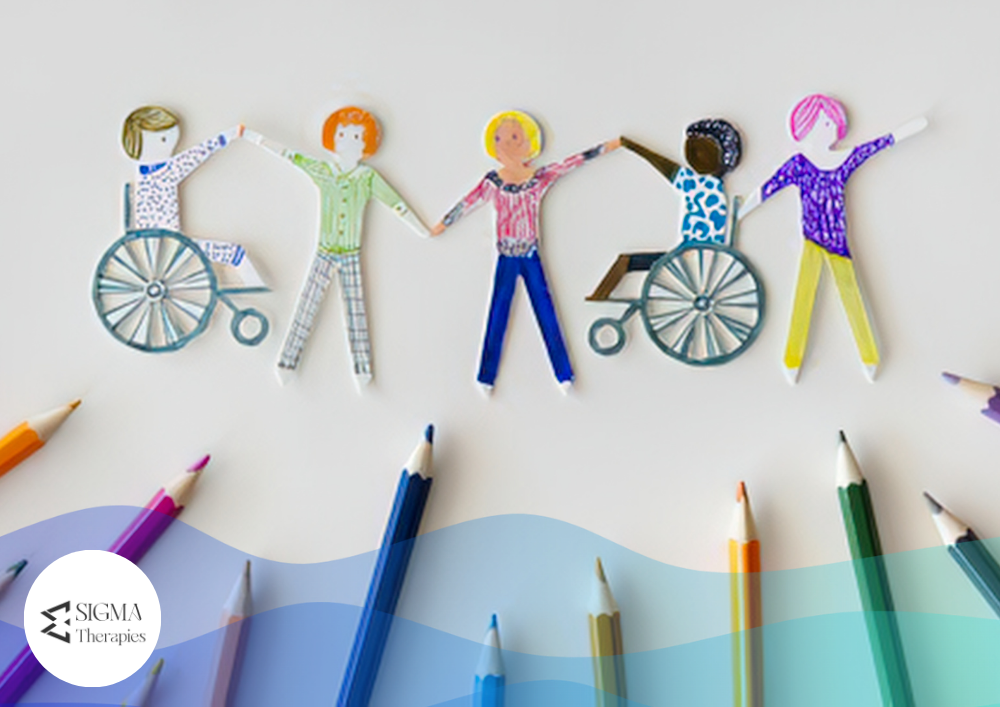
It’s not just the person receiving support who benefits
When families first hear about Positive Behaviour Support, most of the conversation tends to centre on the person receiving it: the strategies, the plan, the goals. Of course, PBS is built around that person, so it makes sense. But there's also another side of this approach that deserves attention: when PBS is working well, it makes daily life better for everyone in the home.
You can notice calmer routines: in the mornings, at mealtimes, during transitions, and at the end of a long day when everyone's emotional energy can be depleted. There’s increased predictability, and the strategies become clear enough for everyone to follow. The constant low-level tension that builds up in households where behaviour is unpredictable can also start to ease.
If you're a parent, carer, or sibling who has been living inside a difficult routine for a while, that shift is worth understanding.
The Hidden Exhaustion
Difficult moments can wear families down. So does everything around them: how you start watching for signs before anything has even happened; the way conversations get driven or noise levels are managed, and certain topics quietly becoming off-limits not because anyone decided to, but because the household learned over time what keeps things relaxed. Sometimes, siblings adjust their behaviour, almost without knowing it, to reduce friction. Or you may lie awake wondering whether tomorrow will be like today, or harder.
It’s a sort of ongoing vigilance with a real cost. It tends to be invisible to the people outside the home, to the professionals writing reports, sometimes even to the family itself, because it has just become the way things are.
PBS doesn't eliminate every difficult moment. But when it's working well, it changes the conditions that make difficult moments so frequent and so unpredictable. When that changes, being on guard all the time in the background diminishes.
The Role of Consistent Routines
One of the most valuable things PBS brings to a family is clarity about what to expect, what to do, and how everyone in the household should act when things turn gruelling.
For the person receiving support, predictability has a settling effect. Distress is less likely to build if they know what's coming next and transitions are signalled in advance. At the same time, if the demands of the day are structured to match their capacity, they feel more at ease and can control their stress levels. Most challenging behaviours aren’t random. They're responses to a world that feels unpredictable or overwhelming. If you can change the predictability of that world, you can also change the behaviour.
For the rest of the family, the benefit is different but equally relevant. A clear, agreed-upon approach to the difficult moments is proven to be successful as compared to improvised, in the heat of the moment reaction. Thinking through a response calmly and in advance allows the household to stop operating in crisis mode. People know what to do. They feel more confident doing it. And they don’t feel the pressure of figuring it out on the spot, every single time.
Here are some practical ways to put this into practice:
- Visual supports that everyone can use. A visual schedule showing what's happening next. It’s a great tool for the person who finds transitions hard as well as for the whole family. Transitions become a shared, predictable moment rather than a negotiation if everyone refers to the same schedule.
- Agreed language to reduce assumptions. Different people respond differently to the same situation. It’s a common source of inconsistency in families. Mum says one thing, dad says another, the support worker tries something else. PBS plans can help as they include specific, agreed language: what to say, how to say it, in what sequence. The person receiving support is therefore met with a consistent message, regardless of who is communicating. That consistency is calming in itself.
- Agreed responses to difficult moments. When a behaviour escalates, the natural response is emotional — completely understandable. But if everyone already knows what to do, that emotional charge has somewhere to go. Having a plan doesn't prevent hard moments, but it changes how everyone copes with them.
- Environmental changes that prevent escalation. Sometimes, the most effective strategy is a small change to the physical environment. It can be a slight reduction in noise during a difficult transition, reorganising the sequence of morning tasks, or creating a space where the person can regulate without feeling cornered. You don’t need to introduce dramatic interventions. They're adjustments that, once made, become the new normal.
What Changes for Siblings
Families have told us this is one of the most meaningful outcomes once PBS is in place: the change experienced by siblings of children and adults with disability.
They’re one group that often carries more than anyone realises. They've learned to read moods, to adjust their behaviour, to manage their own responses with a maturity that shouldn't be required of them. They love their family members deeply, but they're also so tired that words can’t describe.
So when the home environment becomes more predictable and the strategies become clearer, siblings get something back. They don't have to be constantly on watch; they can feel the confidence that comes from having a behaviour plan. Bit by bit, the household is not a place to be managed but rather a home where you can be yourself.
A Plan That Fits Your Real Life
Positive Behaviour Support isn’t abstract. It's an approach built around your family in real life, from morning and after-school routines, to Sunday afternoons when everyone is tired and there are still hours left in the day.
A behaviour support practitioner who takes the time to understand how your household works can build really useful strategies. Not strategies that would work for a family with unlimited time and no competing demands. Strategies that fit around a school run, a work schedule, a sibling who needs attention too.
Talk to Our Team
At Sigma Therapies, our behaviour support practitioners work alongside families to build plans that are practical, personalised, and grounded in daily experiences. We support children, adolescents, and adults across Perth and regional WA.
If you have a family member whose behaviour is affecting life at home, you don't need to wait until things reach a crisis point to reach out. Earlier support tends to make a bigger difference.
Get In Touch
For referral enquiries, clinical consultations, or questions about complex cases, our team welcomes conversations with support coordinators and allied health professionals.
Other blog posts you may be interested in: