Your Free Guide to Making Confident PBS Referrals
Making the right Positive Behavior Support referral can change outcomes for the people you support.
With seven practitioner domains, complex compliance requirements, and real consequences when things go wrong, it helps to have a clear, reliable reference on hand.
We've put together a practical, no-jargon guide written specifically for Support Coordinators, Allied Health professionals, and other professionals working within the NDIS.
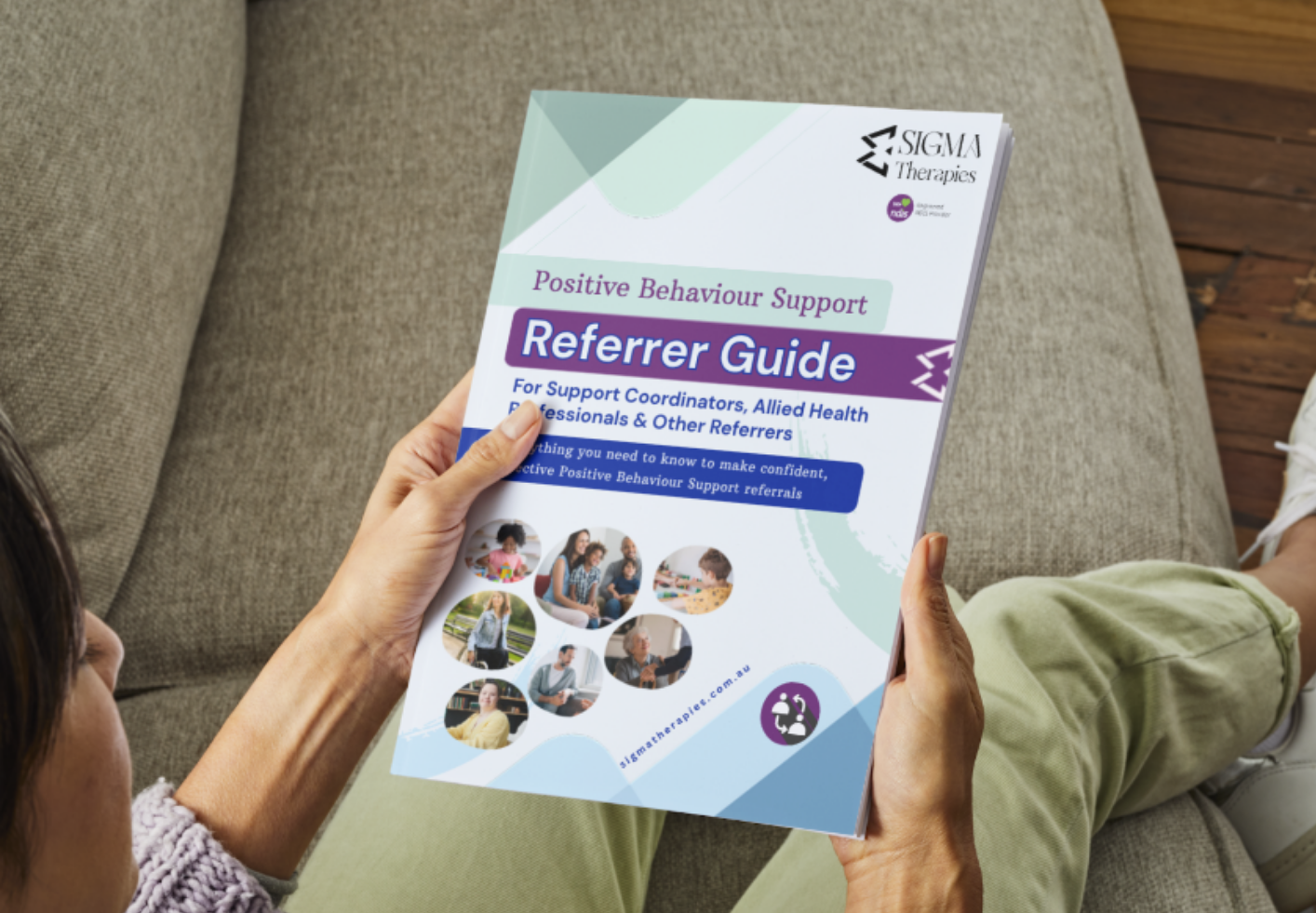
What you'll find inside the guide:
This isn't a general overview of PBS. It's a practical, section-by-section resource built around the decisions you are constantly required to make.
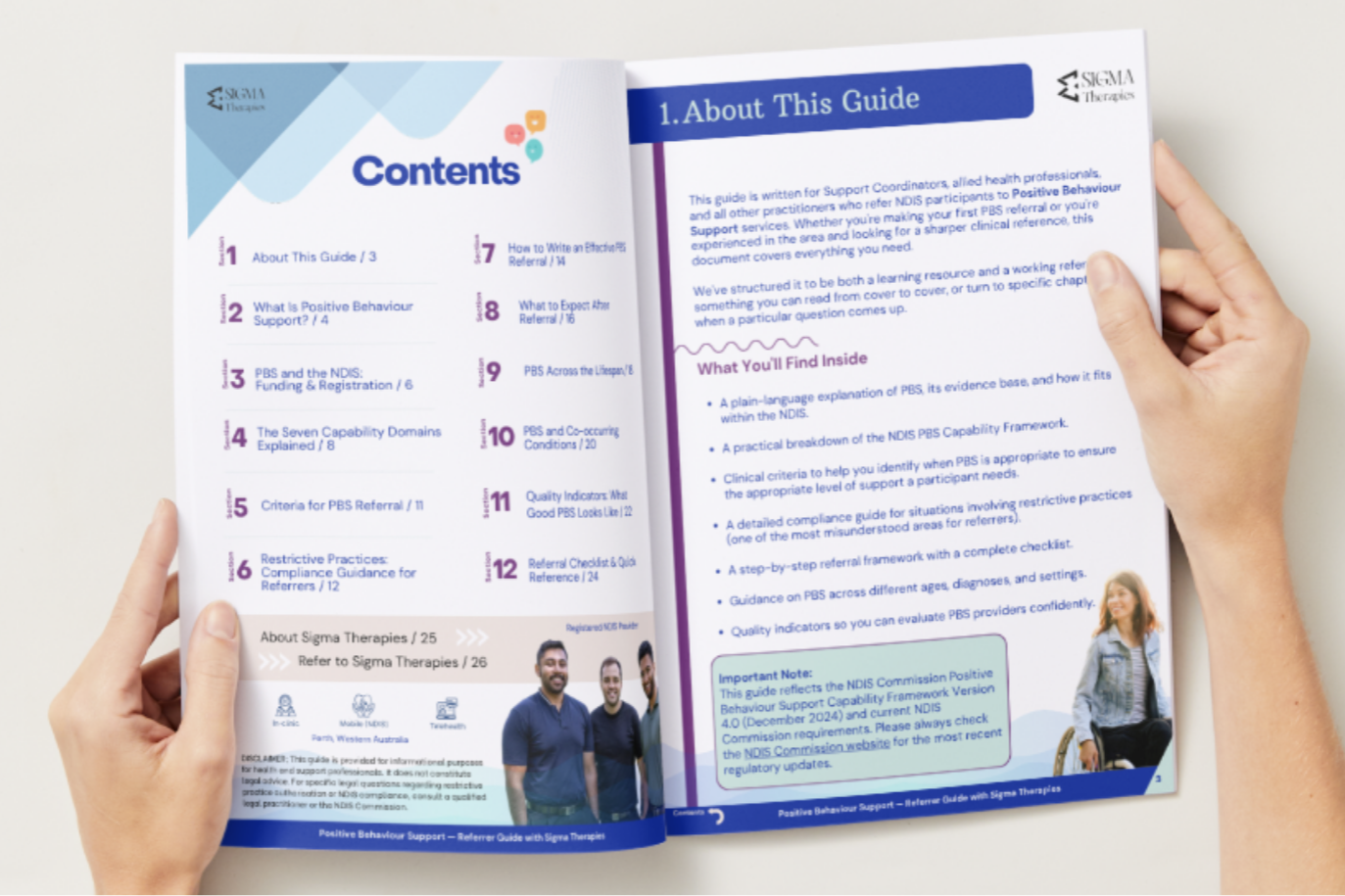
- What Is Positive Behaviour Support? A clear explanation of PBS, including how it differs from traditional behaviour management and why the evidence behind it matters for your referrals.
- BS and the NDIS: Funding & Registration. Exactly where PBS sits in an NDIS plan, which budget category covers it, and how to make the case when the funding isn't there yet.
- The Seven Capability Domains Explained. The framework every registered PBS provider is assessed against and what each domain should look like in practice, so you can evaluate quality, not just credentials.
- Criteria for PBS Referral. A practical guide to identifying when PBS is appropriate and how to match participant complexity to the right level of support, without second-guessing yourself.
- Restrictive Practices: Compliance Guidance for Referrers. This compliance area covers the five categories of regulated restrictive practices, the authorisation process in WA, and the red flags that signal urgent action.
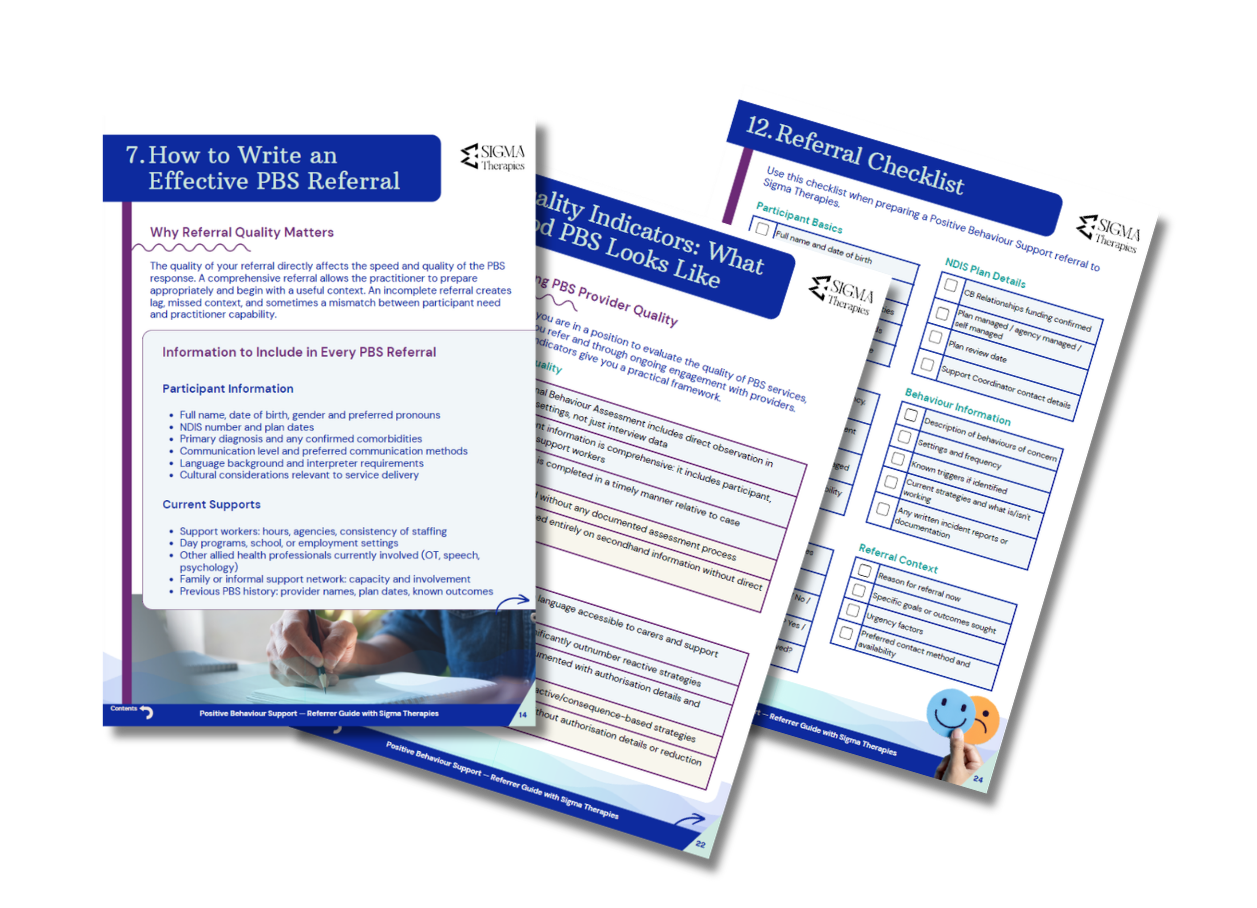
- How to Write an Effective PBS Referral. A field-by-field breakdown of what to include and why incomplete referrals delay the support your participants need.
- What to Expect After Referral. A clear timeline from intake to ongoing review, so you can set accurate expectations with participants and families and know when to follow up.
- PBS Across the Lifespan. PBS looks different for a five-year-old than it does for a 45-year-old. This section covers the key considerations by life stage, from early childhood through to older adults.
- PBS and Co-occurring Conditions. ASD, intellectual disability, ABI, trauma, mental health, they all change the clinical picture and what to look for in a provider's approach.
- Quality Indicators: What Good PBS Looks Like. A practical checklist to evaluate any PBS provider, covering assessment quality, plan quality, implementation support, and monitoring. Use it before you refer, or when something doesn't feel right.
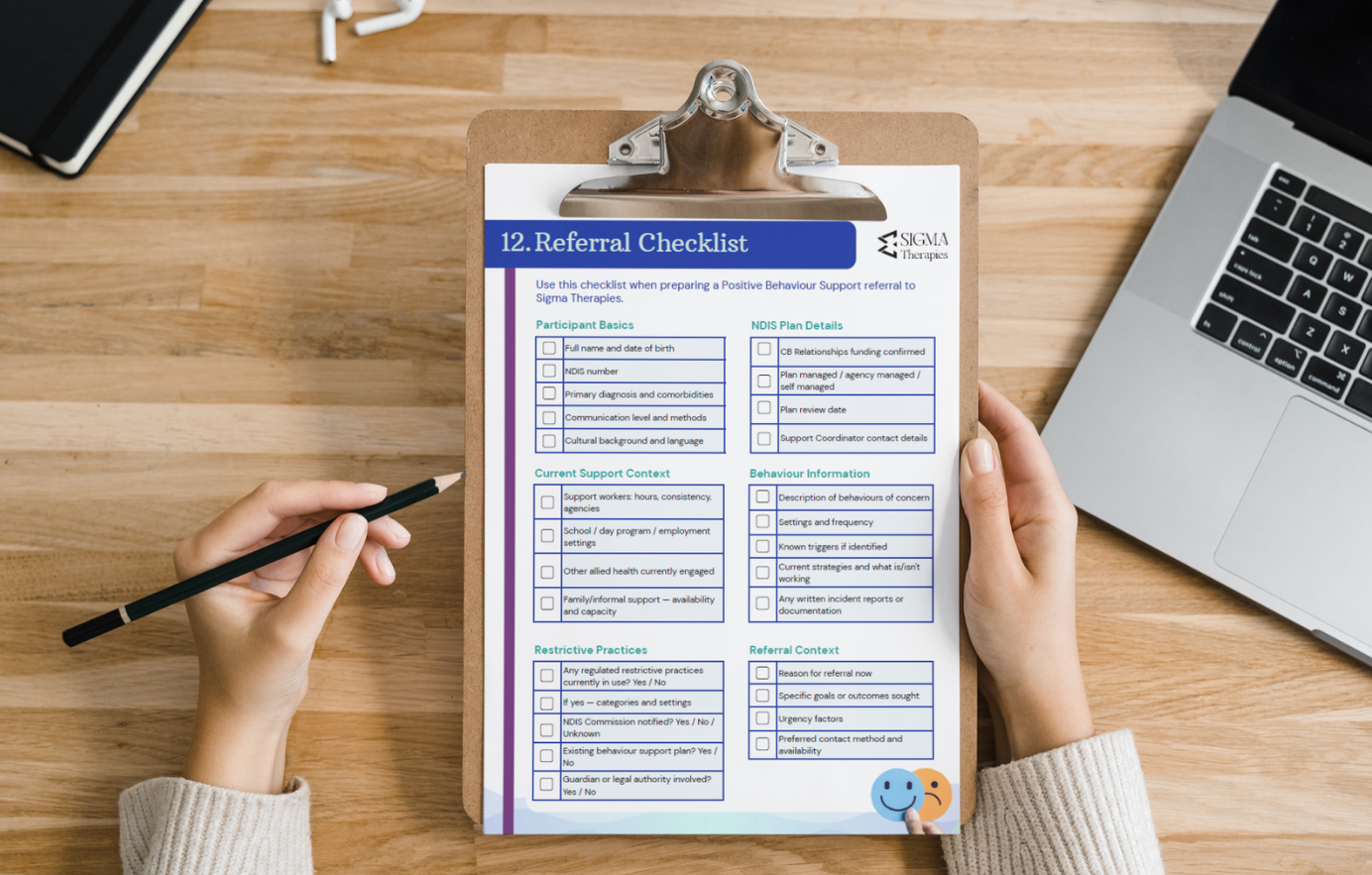
- Referral Checklist & Quick Reference. Everything you need to submit a complete, confident referral. Print it, save it, use it every time.
Sigma Therapies PBS Referrer Guide.
Free. No obligation. Yours to keep.
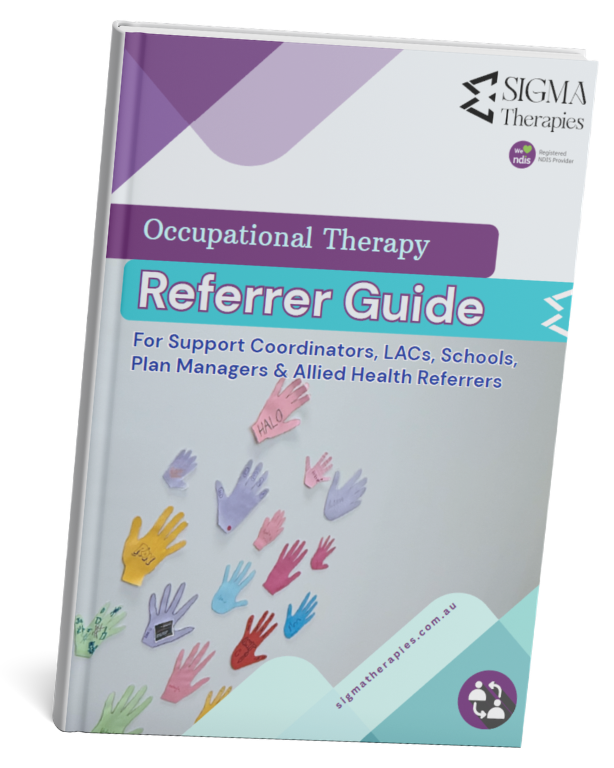
You may also be interested in our Occupational Therapy Referrer Guide, specifically designed for Support Coordinators and referrers like you.